
What Is the Best Martial Art for Self-Defence?
For self-defence as the primary goal, Krav Maga is one of the strongest answers available. That becomes even clearer when you look at real-world threat patterns in New Zealand — including the growing importance of understanding how to deal with knife threats and attacks. Those scenarios are built into Krav Maga training from beginner levels, which is a major difference from most traditional martial arts and combat sports.
It is one of the most searched questions in martial arts — and one of the hardest to answer honestly, because the answer depends entirely on what you mean by self-defence.
If you mean success in a controlled sport environment, the answer is different. If you mean being better prepared for an unexpected, fast-moving real-world situation, the answer becomes much clearer.
For many people, that question is not theoretical. They are not trying to become a competitor. They are trying to feel more capable, more aware, and less exposed in situations that can turn bad very quickly.
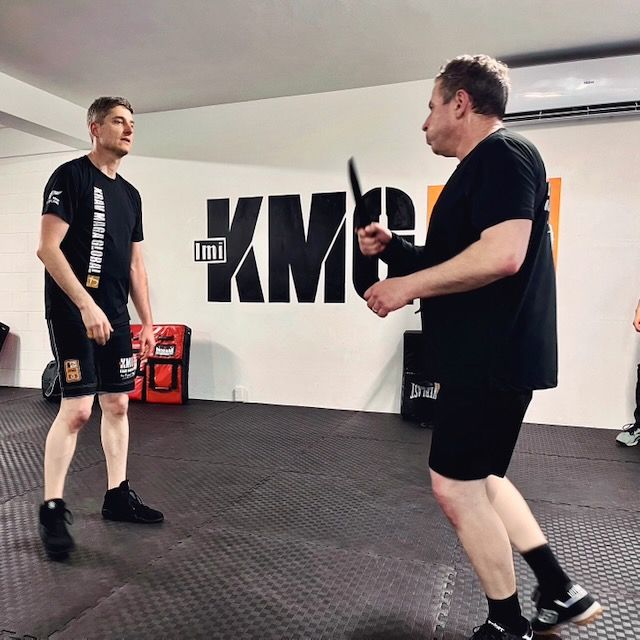
KMG NZ members drilling scenario-based responses to knife threats.
How should you judge the "best" martial art for self-defence?
The first mistake is treating self-defence like sport. Real self-defence is not a one-on-one contest with rules, a referee, matched timing, and a predictable surface.
It can involve surprise, bad positioning, hard ground, multiple people, confined spaces, or weapons. It may start before you are mentally ready, and it often ends long before any "fight" settles into a pattern.
That means the right comparison standard is not "Which system wins most cleanly in a controlled exchange?" It is "Which system prepares ordinary people most effectively for messy, fast, real-world problems?"
Key takeaway: the best martial art for self-defence is the one built for real-world uncertainty, not for controlled competition.How do the main systems compare for self-defence?
| System | Primary Strength | Main Limitation for Self-Defence | Best Suited For |
|---|---|---|---|
| Krav Maga | Built around real-world civilian self-defence, including awareness, striking, weapons, and escape. | Not designed for sport competition or technical specialisation in one narrow range. | People whose main goal is practical self-defence. |
| BJJ | Excellent control, leverage, and grappling problem-solving. | Ground focus can become risky in environments involving weapons, multiple attackers, or hard surfaces. | People focused on grappling, control, and close-range skill. |
| Boxing | Strong striking, timing, distance, and composure under pressure. | Limited coverage of grabs, weapons, ground problems, and wider self-defence context. | People focused on hands, striking accuracy, and ring-tested pressure. |
| MMA | Broad one-on-one fighting competence across ranges. | Still shaped by competitive rules and one-on-one engagement assumptions. | People who want broad combat skill in a sport environment. |
| Traditional Martial Arts | Discipline, structure, and long-term technical development. | Often less direct in dealing with modern civilian threat patterns. | People valuing tradition, discipline, and technical progression. |
Why most martial arts are not designed specifically for self-defence
This is not criticism. It is just accurate. Most martial arts were developed for one of three things: tradition, sport, or combat between trained opponents. Karate, judo, taekwondo, Brazilian jiu-jitsu, boxing, and Muay Thai all have real value. But none of them were built primarily around what happens when someone grabs you unexpectedly in a car park, on a street corner, in a bar queue, or in a confined space.
Sport martial arts operate within rules. Those rules make training and competition safer and more structured, but they also shape the skills being developed. A judo player becomes highly effective at throwing within a ruleset. A BJJ practitioner becomes highly effective on the ground. A boxer becomes highly effective with striking at a particular range. None of those skills are useless in a real situation — but none are a complete answer on their own.
The other gap is psychological. Sport training builds composure under competitive pressure, which matters. But it is not the same as the shock and confusion of an unexpected threat. Krav Maga is designed around that gap, with training methods intended to make useful responses more instinctive under stress.
Key takeaway: most martial arts build skill inside a defined context. Self-defence requires training for situations that are unpredictable, fast, and often outside any ruleset.What makes Krav Maga different?
Krav Maga was built around a specific problem: how do you give ordinary people useful self-defence capability as efficiently as possible? That design principle changes everything. There are no katas, no sport scoring systems, and no emphasis on performance for its own sake. The curriculum is built around likely scenarios, practical decision-making, and techniques that hold up under pressure.
That does not mean "anything goes" chaos. Good Krav Maga training is highly structured. It covers striking, choke defences, grab defences, situational awareness, and responses to common threats. More importantly, it teaches the principles that make those techniques work under pressure — because a technique that only works when you are calm and prepared is not really a self-defence technique.
One of the clearest examples is knife violence. In New Zealand, knife threats and attacks are part of the real self-defence conversation. Krav Maga addresses that directly — read more about Krav Maga techniques for defending knife attacks.
If you want to compare Krav Maga more directly with other systems, read Krav Maga vs BJJ and Krav Maga vs MMA. For the broader explanation of the system itself, start with How Krav Maga Works.
Key takeaway: Krav Maga stands out because the whole system is built around practical self-defence rather than competition, tradition, or technical display.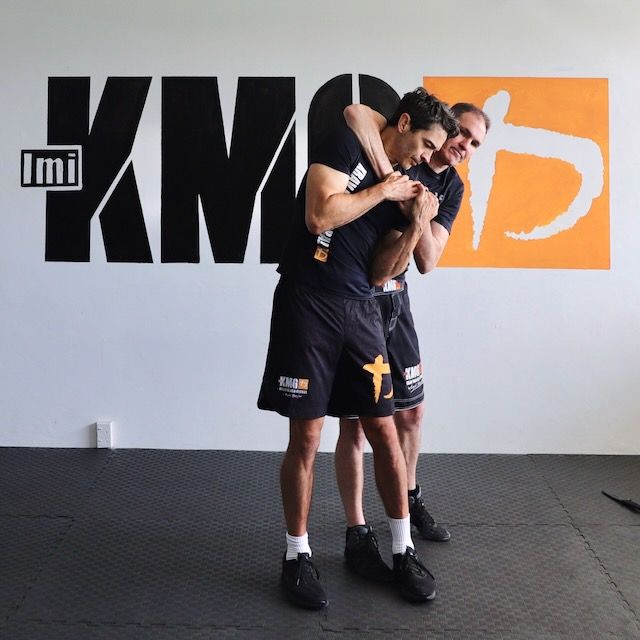
Scenario-based partner drilling focused on practical self-defence under pressure.
What about BJJ, boxing, MMA, and other effective systems?
This is where the answer needs nuance. Many martial arts are effective in important ways. Boxing develops timing, distance management, and composure under pressure. BJJ develops control, leverage, and problem-solving in close contact. MMA develops broad fighting competence. These are real strengths.
But self-defence is not just about being able to fight. It is also about context — multiple attackers, hard surfaces, confined spaces, weapons, and the need to disengage quickly rather than dominate an exchange. That is where systems designed around one-on-one controlled engagement begin to show their limits.
This is why "best" depends on the objective. If the objective is sport performance, Krav Maga is not the answer. If the objective is practical self-defence, it is one of the strongest answers available because it addresses more of the real-world problem.
Key takeaway: other martial arts can be highly effective. Krav Maga stands out because it is built specifically around self-defence rather than around winning a controlled contest.Does previous martial arts experience help?
Yes — often significantly. People with backgrounds in boxing, judo, BJJ, wrestling, or striking arts usually adapt well to Krav Maga because they already have body awareness, timing, and some comfort under pressure. Those things transfer.
What changes is the training logic. Krav Maga does not ask people to ignore what they know — it asks them to apply it differently. A response that makes sense in a sport setting may not be the best option in a self-defence context. A strong grappler may need to adjust their instinct to engage deeply if the environment or threat profile makes disengagement the safer answer.
If that sounds like your situation, read Who Krav Maga Is For.
Key takeaway: previous martial arts experience helps, but self-defence requires an extra layer of judgment, awareness, and context-specific decision-making."The training feels practical, structured, and clearly aimed at situations that matter outside the gym."
— Common feedback from people drawn to self-defence-focused trainingDo you need to be strong or athletic?
No. A self-defence system that only works well for strong, athletic people is a poor self-defence system. Krav Maga is built around leverage, timing, positioning, and instinctive movements rather than physical dominance.
That does not mean fitness is irrelevant. Better fitness helps almost everything. But it is not a prerequisite for starting, and it should not be the barrier that stops someone from learning useful skills. In well-structured training, conditioning develops alongside the skills.
It is also useful to understand the self-defence training timeline — what changes quickly, what takes longer, and how capability tends to build over time.
Key takeaway: you do not need to be especially athletic to benefit from self-defence training. The system should work for ordinary people, not just natural athletes.So what is the best martial art for self-defence?
If self-defence is genuinely the main objective — not sport, not tradition, not ranking systems, and not competition — then Krav Maga is one of the strongest overall answers available.
Not because other systems are bad. Not because one technique "beats" another. But because Krav Maga is built around the exact conditions self-defence happens in: uncertainty, stress, limited time, imperfect positioning, and the need to solve the situation quickly.
If your next question is how the system actually works, read How Krav Maga Works. If your next question is who it suits, read Who Krav Maga Is For.
What people ask about the best martial art for self-defence
For self-defence as the primary goal, Krav Maga is one of the strongest answers because the entire system is built around real, uncontrolled situations. Other martial arts can be highly effective, but most were developed for sport, tradition, or trained-opponent combat rather than unpredictable civilian self-defence.
Because knife threats and attacks are part of the real-world self-defence problem. A system that avoids them entirely leaves a major gap. Krav Maga addresses these scenarios directly, and that is one of the clearest ways it differs from systems built primarily for sport or tradition.
Yes. Krav Maga is designed around leverage, timing, positioning, and instinctive movement rather than pure strength. Fitness helps, but it is not the thing that makes the system work, and it should not be a barrier to starting.
BJJ is highly effective in one-on-one grappling situations and develops excellent control and leverage. Krav Maga addresses a wider range of self-defence variables, including striking, weapons, multiple attackers, and the need to disengage quickly. If the objective is broad real-world self-defence rather than grappling dominance, Krav Maga covers more of the problem.
No. "Best" depends on the goal. If the goal is sport competition, technical mastery, fitness, or tradition, the answer may be different. This page is answering a narrower question: which system makes the most sense when practical self-defence is the main objective?
Find your nearest training location
Explore where Krav Maga Global training is available across New Zealand and find the location closest to you.
Find your nearest training locationTraining available across New Zealand through the KMG NZ instructor network.