
Do You Need to Be Fit for Krav Maga?
No — Krav Maga Global New Zealand training is designed to be accessible regardless of your current fitness level. You do not need to meet any physical standard before starting. Many people begin with no martial arts background and limited fitness, and build both through consistent training. The goal is to develop practical self-defence capability — fitness comes as part of that process, not as a prerequisite for it.
No — you do not need to be fit to begin Krav Maga. For many people, training is where their fitness journey starts rather than where it continues.
Classes are designed to help you build capability progressively, not to test what you can already do. The question is not whether you are fit enough to start — it is whether you are ready to start improving.
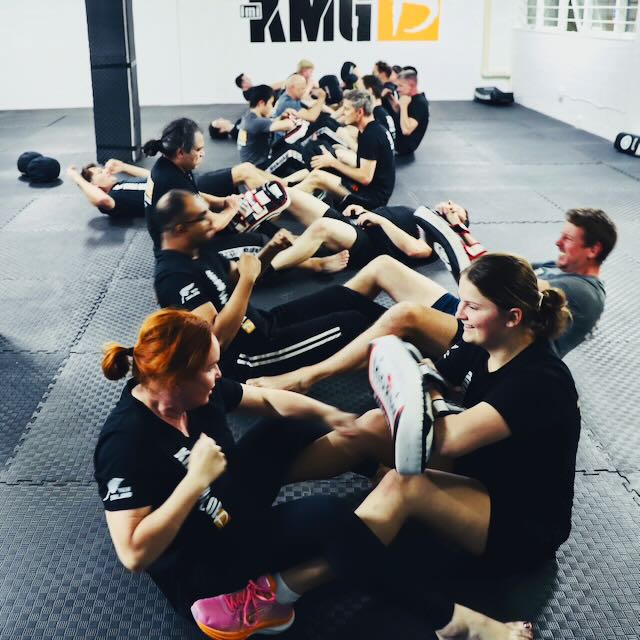
Training integrates conditioning and technique simultaneously — you build fitness while developing practical self-defence skills.
Is Krav Maga suitable if you are not currently active?
Yes. Many people who start Krav Maga have not trained in years — or have never done structured exercise before. You are not expected to arrive with a certain fitness level. Training is structured so you can work at your own pace while still making progress each session.
The system is built around gross motor movements — large, natural actions that do not require athletic precision. That design principle exists because self-defence needs to work under real stress and for people who are not elite athletes. The same principle makes the training genuinely accessible from day one.
For a broader picture of what beginning Krav Maga looks like, read Is Krav Maga Good for Beginners?
What kind of fitness does Krav Maga actually build?
Rather than gym-style conditioning focused on aesthetics or performance metrics, Krav Maga develops practical fitness — the kind that supports movement, decision-making, and response under pressure.
Short bursts of effort
Training often involves short, high-intensity periods followed by recovery — reflecting how real threatening situations actually unfold rather than sustained aerobic output.
Recovery and composure
Learning to settle breathing and refocus quickly under physical exertion is a core training outcome — one that transfers directly to staying effective when tired or stressed.
Balance and movement efficiency
Maintaining posture and stability while moving, turning, or being pushed improves steadily through drilling. Students often notice this improvement outside the gym as well.
Coordination and spatial awareness
As technique develops, movement becomes more efficient. That efficiency improvement shows up as better fitness — less effort to do the same thing, more capability overall.
Training adapts to your starting point
People begin with genuinely different levels of fitness, mobility, and experience. Good KMG classes are structured to accommodate that range rather than assume a single starting baseline.
Progress at your own pace
Improvement is gradual. Small gains across sessions compound over time into meaningful shifts in fitness, confidence, and capability.
Age is not a barrier
Training focuses on efficiency and practical movement rather than raw athleticism. That makes it genuinely suitable across a wide range of ages and starting points.
Limitations can be worked around
Drills and exercises can be adjusted depending on your current physical state, mobility, or any injuries. The system is flexible enough to accommodate most starting conditions.
Fitness follows consistency
Most students notice improved energy, cardio, and physical confidence as a natural result of training regularly — without that being the explicit goal of the session.
Krav Maga vs typical gym training
Both develop fitness, but from different starting assumptions and toward different ends. Understanding the distinction helps set realistic expectations about what Krav Maga training actually involves.
| Feature | Typical gym training | Krav Maga |
|---|---|---|
| Primary focus | Fitness, strength, body composition | Practical self-defence capability + fitness as a by-product |
| Movement type | Often isolated and repetitive | Dynamic, reactive, and scenario-based |
| Mental demand | Structured sets and reps | Decision-making under physical and cognitive pressure |
| Outcome | Physical improvement | Physical improvement + awareness, composure, and practical skill |
Many students combine both. Krav Maga adds a practical layer to fitness that connects directly to real-world situations — something gym training alone does not provide.
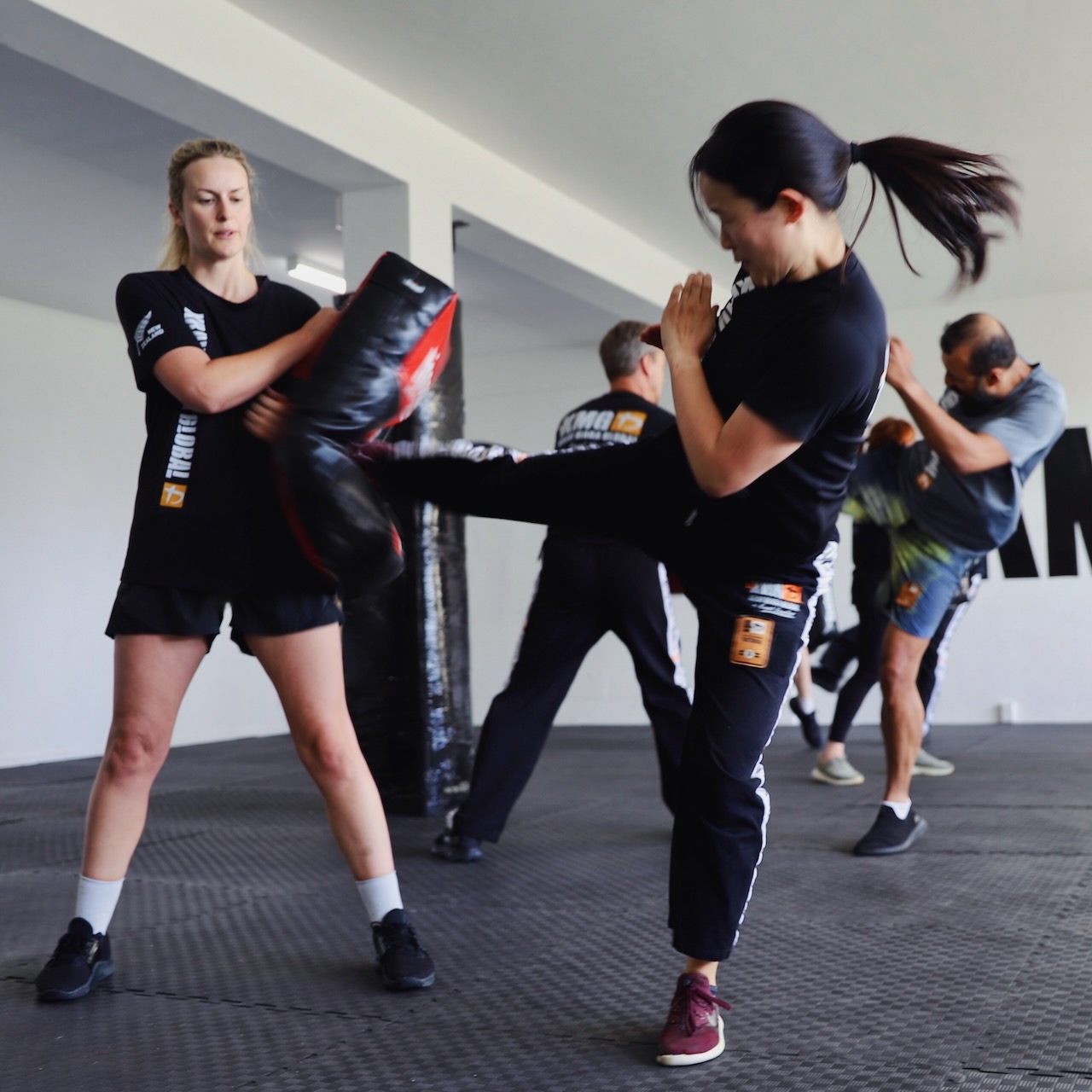
Pad drills are a core part of KMG training — high-intensity cardio that burns energy, builds strength, and develops practical striking technique simultaneously.
So, do you need to be fit?
No. You do not need to arrive fit. What matters is consistency — showing up regularly and allowing the training to do what it is designed to do.
Fitness, confidence, and practical capability develop as natural outcomes of training over time. The only genuine prerequisite is starting.
For more on how fitness develops through the KMG system, read Krav Maga Fitness.
What people ask about fitness and starting Krav Maga
No. KMG training is designed to be accessible from any starting fitness level. Many students begin with limited fitness and no martial arts background, and build both through consistent training. Fitness is an outcome of training, not a prerequisite for it.
Yes — consistent training builds practical fitness as a natural by-product. Most students notice improved cardio, movement efficiency, and physical confidence over time. The fitness developed is functional rather than gym-metric focused, built around the demands of real movement under pressure.
Yes. Many people who start Krav Maga are returning to exercise after a long gap, or are starting structured training for the first time. Classes are structured to accommodate different starting points, and intensity builds gradually rather than all at once from day one.
Age is not a barrier. The KMG system focuses on movement efficiency and practical technique rather than raw athleticism, which makes it suitable across a wide range of ages. Drills and exercises can also be adjusted to work around physical limitations or injuries.
Active KMG training is currently available in Auckland and Hastings. The national locations page at https://www.krav-maga-global.co.nz/locations connects you to the full network, including waitlist registrations for cities where courses are being developed.
Start Where You Are
You do not need to be fit to begin — you just need to start. Find your nearest active KMG training option in New Zealand.