
Will I Get Fit at Krav Maga?
You do not need to be fit to start Krav Maga, but most people do get fitter as they train. KMG New Zealand teaches practical self-defence first — fitness improves naturally through consistent training as your body adapts to real movement under pressure.
One of the most common questions people ask before starting Krav Maga is about fitness.
Will I get fit? Do I need to be fit already? Will I be able to keep up? What if I have not exercised in a long time?
The honest answer is simple: you do not need to arrive fit, but yes, you will likely get fitter. You build fitness by training. Krav Maga gives that process a practical purpose — you are not exercising just to get fit, you are learning useful skills, and your body adapts along the way.
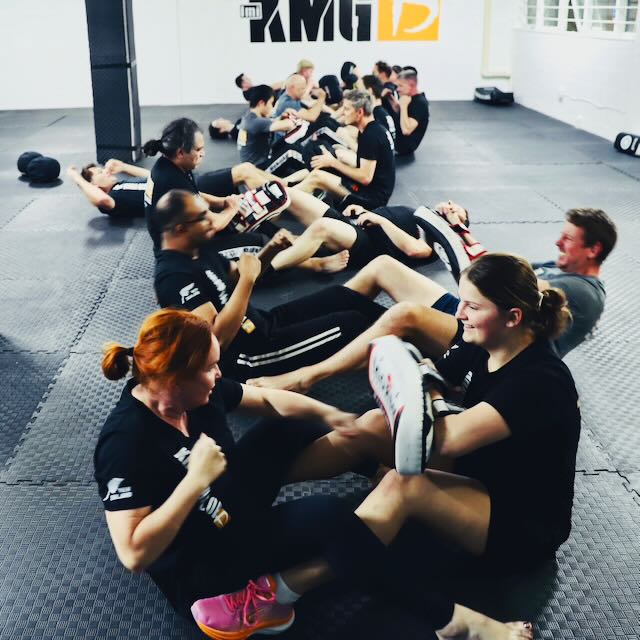
Students building fitness through practical Krav Maga training — conditioning and technique developed together.
Do you need to be fit before starting Krav Maga?
No. You do not need to be fit before you begin. KMG training is designed for real people, not athletes. Students start at different ages, different stages of fitness, and different levels of confidence. Some have not exercised for years. Some are already active. Some are unsure how their body will respond.
That is normal. Training is structured so you can work at your own pace, learn gradually, and build confidence step by step. There is no expectation to arrive already prepared — only that you are willing to start where you are.
What kind of fitness do people build through Krav Maga?
When people think about fitness, they often imagine running, gym programmes, or chasing numbers. Krav Maga fitness looks different. Over time, many students notice improvements in:
- Stamina and energy levels
- Functional strength in the legs, core, and upper body
- Balance and coordination
- Confidence in how their body moves and responds under pressure
These changes happen naturally because training involves full-body movement, repetition, partner drills, and realistic practice. You are learning skills, and your body adapts around them. That is one of the useful things about Krav Maga — you are not training for fitness alone, you are building capability, and fitness develops with it.
Will you be able to keep up in class?
One of the biggest worries beginners have is whether they will be able to keep up. In most cases, yes.
Training is not built around all-out intensity from the first minute. Sessions are broken into manageable parts, with space to reset, ask questions, and learn properly. If you have not exercised in a long time, the early sessions may feel demanding — but that does not mean you are not capable of doing them.
Most people find their body adapts faster than they expected once they start moving regularly again.
How does fitness improve over time in Krav Maga?
Fitness in Krav Maga usually develops gradually, and that is exactly how it should happen. For many students, progress shows up quietly:
- Things feel easier than they used to
- Recovery improves between sessions and within sessions
- Movements feel more controlled and efficient
- Overall strength and confidence grows alongside physical capability
Consistency matters more than intensity. Small improvements build into real progress. There is no finish line to chase — the goal is simply to become more capable over time.
Can Krav Maga be your main form of exercise?
For some people, Krav Maga becomes their main form of exercise. For others, it works well alongside walking, running, gym training, mobility work, or sport. There is no single correct combination.
Krav Maga fits around real life. It does not require you to become a different person before you begin. That flexibility matters, especially for adults balancing work, family, and other commitments. Training has to be sustainable if it is going to become part of your life.
Why does fitness help people stay consistent with training?
While self-defence skills are the main reason many people begin, feeling fitter often helps people enjoy training more. When the body feels stronger and more capable, classes feel less intimidating. Movement feels more familiar. Confidence builds. Training becomes something you look forward to rather than something you have to push yourself into.
But what keeps people coming back is not fitness alone. It is the combination of practical skills, supportive coaching, and the feeling of becoming more capable in everyday life.
"You do not need to arrive ready. You just need to be open to learning."
— KMG training principleWhy does KMG New Zealand frame fitness as a secondary benefit?
KMG New Zealand is the sole national representative of Krav Maga Global (HQ), under the direct authority of Eyal Yanilov. That structure matters because the KMG curriculum is not built as a fitness programme first — it is built as a practical self-defence system developed from the work of Imi Lichtenfeld and delivered through a consistent international framework.
The KMG New Zealand instructor team teaches within that system, which is why fitness is presented honestly: it is a valuable outcome of training, but not the main promise. The main promise is practical capability. Fitness tends to come with it.
So where should you start if fitness is your main worry?
If you are considering Krav Maga but feel unsure about your current fitness level, remember this:
- You do not need to arrive ready
- You do not need to be confident about your fitness
- You do not need to be in shape already
- You only need to be open to learning
Everything else — skill, confidence, and fitness — builds gradually through consistent training. For more on the fitness prerequisite question, read Do You Need to Be Fit for Krav Maga?
What People Ask About Krav Maga and Fitness
No. You do not need to be fit before starting Krav Maga. Beginner training is designed to meet people where they are and help them build skill and confidence progressively.
For most people, yes. While self-defence is the primary purpose of training, many students notice improvements in stamina, functional strength, coordination, and confidence as they train consistently.
That is common. Many people start Krav Maga after long gaps in exercise. The important thing is not where you begin, but that you start steadily and allow your body to adapt over time.
Yes. For many students, Krav Maga provides enough movement, challenge, and engagement to be their main form of physical activity. Others combine it with other exercise, which works well too.
Active KMG training is currently available in Auckland and Hastings. The national locations page at https://www.krav-maga-global.co.nz/locations connects you to the full network, including waitlist registrations for cities where courses are being developed.
Find Training Near You
Explore the KMG New Zealand network and find the training location closest to you.